Tank Project 2026
When the Water Runs Out: A Community Solution for the Top of the South
In much of New Zealand, turning on a tap is something most of us don’t think twice about. But for many rural communities across the Top of the South, water — reliable, accessible water — isn’t something you can take for granted. And in an emergency, that gap between what people need and what’s actually available can become very serious, very quickly.
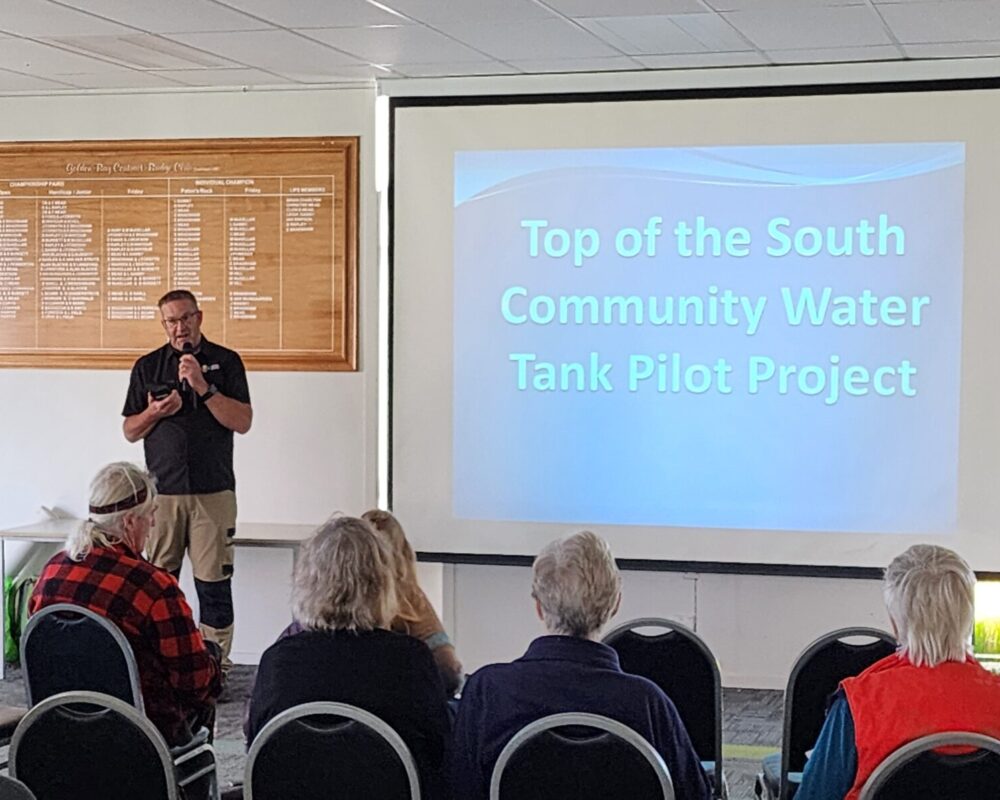
The Top of the South Community Water Tank Pilot Project is a grassroots response to that reality. It’s a practical, community-led initiative aimed at placing strategically located water tanks in rural areas where access to water is scarce, difficult, or simply doesn’t exist — and where the consequences of that scarcity, in a fire or a civil defense emergency, can be severe.
Why Rural Communities?
Rural properties across the Nelson and Tasman regions are, almost by definition, outside the reach of reticulated water networks. If you’re on a lifestyle block in the Rai Valley, a farm in the Waimea district, or a small settlement up toward the Lewis Pass, there’s no hydrant at the end of your driveway. You rely on what’s on your property, or nearby — and when something goes wrong, that limitation becomes very real.
Longer response times, difficult terrain, and dispersed settlement patterns all compound the problem. A fire truck arriving at a remote rural property still needs water to fight the fire. A community cut off by an earthquake or a contaminated supply still needs water for drinking, cooking, hygiene, and livestock. These are the situations this project is designed for.
What the Tanks Actually Do
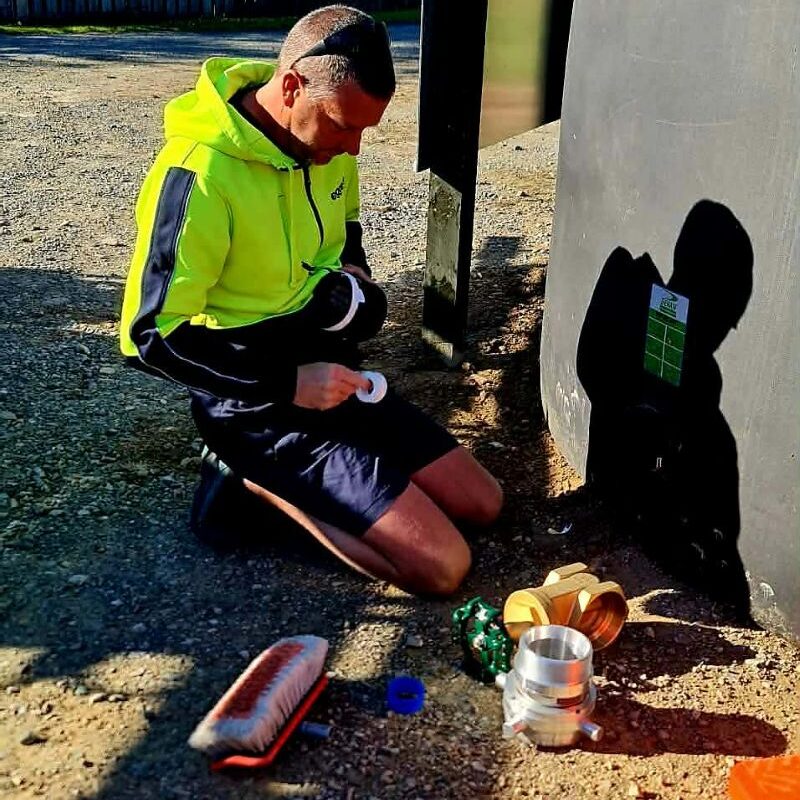
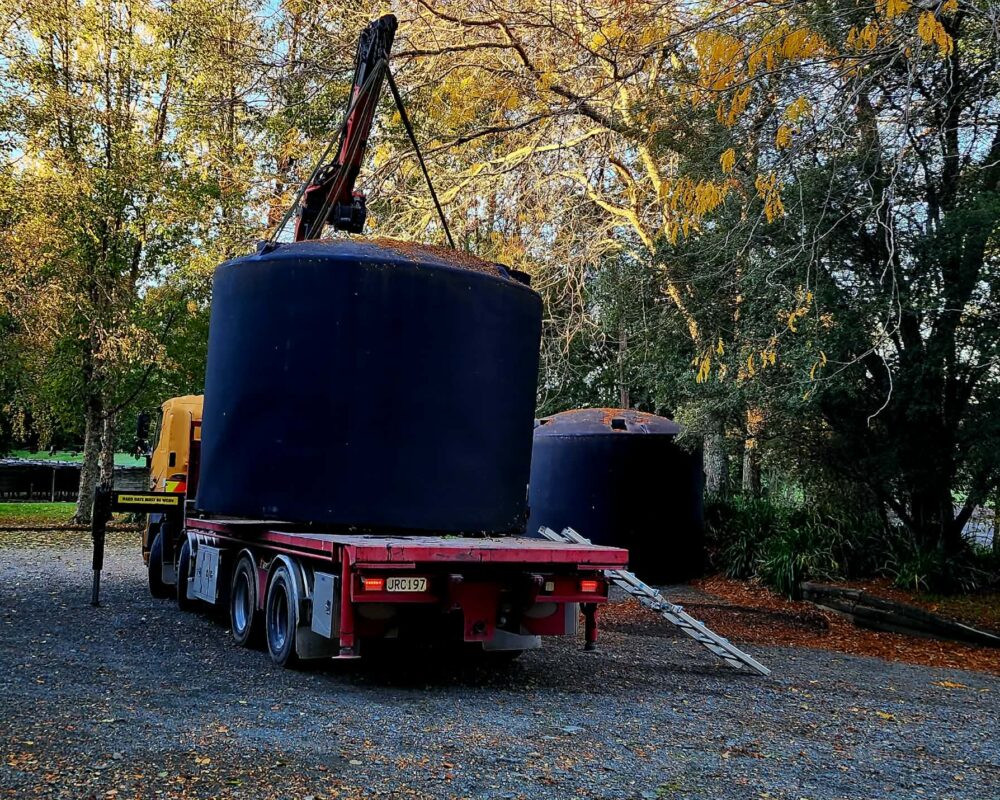
The tanks being proposed aren’t complicated. They’re robust, purpose-built units fitted with standardized 100mm camlock connections — the kind that allow a rural fire truck to connect and draw water quickly, without specialist tools or setup time. In areas where the nearest reticulated hydrant might be many kilometres away, that speed matters enormously.
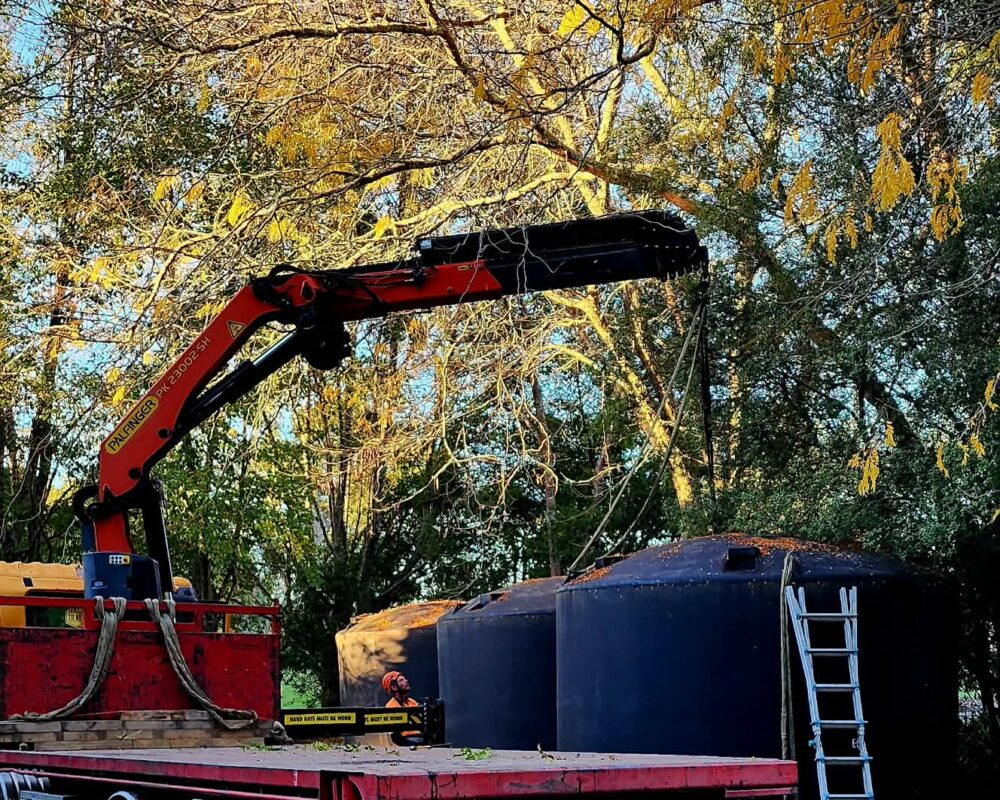
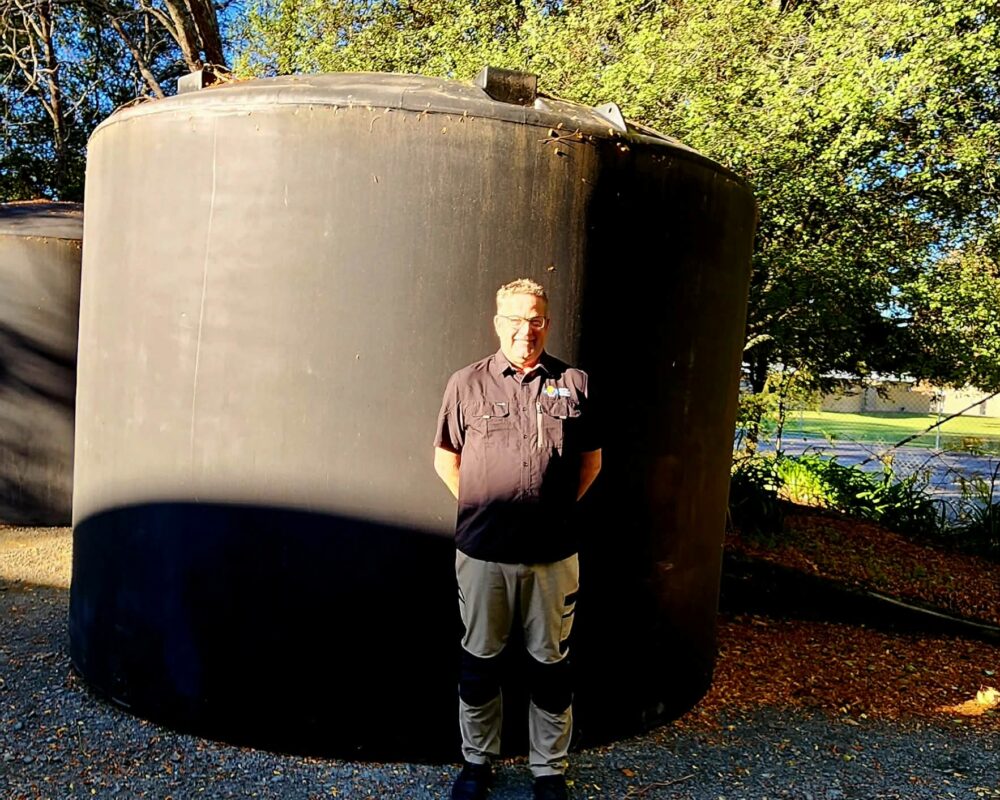
The tanks themselves are the heavy-duty variety — chosen deliberately for their strength and resilience. In a region that knows earthquake risk, a standard tank splitting under ground movement or the stress of a major event isn’t an acceptable outcome. These units are built to hold up when conditions are at their worst, which is precisely when they’re most needed.
Dual tank configurations are also part of the design: one appliance can draw water while another is actively fighting the fire, maintaining a continuous supply for extended operations. Tank locations are mapped and shared with Fire and Emergency NZ and rural fire brigades, so crews know before they respond exactly where the water is and how to reach it.
For civil defence scenarios — drought, earthquake, contaminated supply — the tanks serve a different but equally important role, providing water that communities can use for basic needs while longer-term solutions are put in place.
Why Not Just Use What’s Already There?
It’s a fair question. The Top of the South has no shortage of rivers, streams, farm dams, and private water tanks. So why go to the effort of installing dedicated community tanks?
The honest answer is that existing sources, while valuable, come with significant limitations. Private tanks on rural properties may be empty — drawn down by summer drought, used up by stock, or simply not maintained. They may be located too close to a burning structure to be safely accessed. The terrain around them may make it impossible to get a heavy fire truck close enough to draw water. A tank that exists on a map is not the same as a tank that can actually be used when it matters.
Rivers and waterways present their own serious challenges. In daylight and calm conditions, drawing water from a river can be straightforward. But fires don’t wait for convenient conditions. At night, on uneven ground, near fast-moving water, the risk to a crew attempting to position a pump at a riverbank increases dramatically. Slippery banks, uncertain footing, rapidly changing water levels, and the disorientation of working in smoke and darkness all make natural waterways a genuinely hazardous option when things are already going wrong.
A purpose-built, strategically placed community tank removes most of those variables. It’s in a known location, on stable ground, with standardized fittings and reliable access. In an emergency, that predictability has real value.
Starting at Belgrove
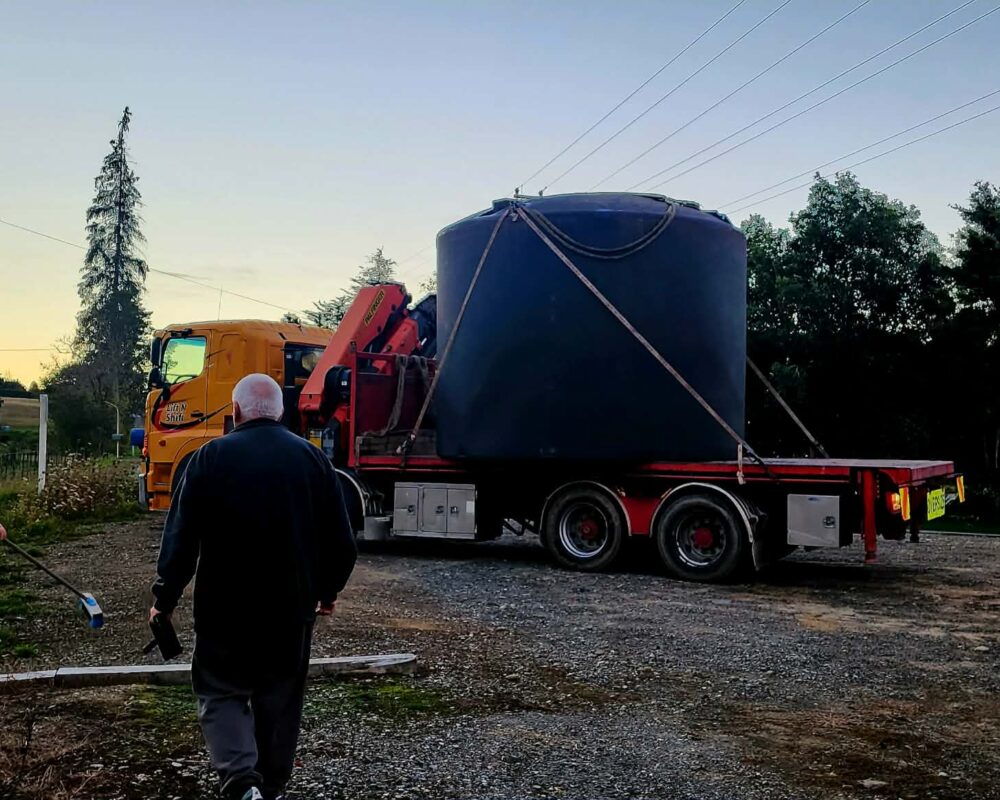
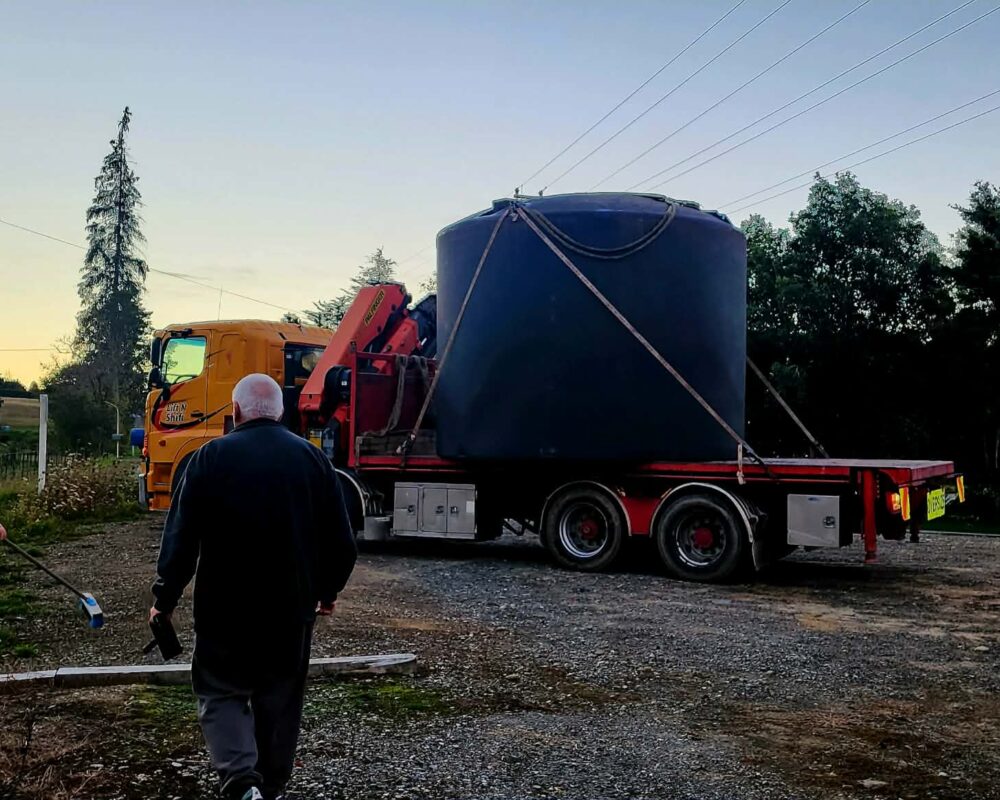
The pilot is starting at Belgrove, a small rural community in the Waimea district along the Upper Moutere Highway. It’s a community that represents exactly the kind of situation this project is designed to help: rural, dispersed, limited water infrastructure, and genuine risk from both fire and civil defense events.
The Belgrove site has been carefully chosen based on accessibility for emergency vehicles, proximity to the community it serves, and data from an ongoing mapping project that underpins the whole initiative.
Working With Communities — Honestly
One of the genuine challenges of a project like this is consultation. Rural communities are spread out, people are busy, and reaching everyone who might have a view on where a tank should go — or whether they want one nearby at all — isn’t always straightforward. We won’t pretend otherwise.
What we can say is that we take that challenge seriously. We work hard to communicate our intentions well ahead of any placement decision, giving local residents time to ask questions, raise concerns, and understand what the project is actually about. We work closely with local councils to ensure we have full permissions in place before anything goes in the ground — whether that’s on road berms, reserve land, or with the agreement of willing landowners.
Sometimes a tank won’t end up in exactly the spot everyone would have chosen. The reality of finding suitable land, securing access, and meeting the practical requirements for emergency use means there are always constraints. But our commitment is to be transparent about the process, to listen where we can, and to make sure that the communities these tanks are meant to serve are part of the conversation — not surprised by the outcome.
We’re Not Here to Make Enemies
We want to be straightforward about something: we know that in any community, there will be people who have concerns about this project, or who would simply prefer it wasn’t happening in their area. That’s a normal and legitimate part of how communities work, and we respect it. Making enemies is the last thing we want to do. What we want is to be useful — and to earn trust by being open about what we’re doing and why.
The honest challenge we’ve run into is that rural consultation across many kilometers is genuinely hard. People move on. New families arrive. Someone who bought a property two years ago may have never heard of the project, missed any information that circulated, and understandably feels like something has happened around them without their knowledge or input. We’ve seen this happen, and we take it seriously.
It’s something we’re actively working to improve — better ongoing communication, not just a single round of consultation when a site is first identified. Because the goal isn’t just to install tanks. It’s to build something that communities actually understand, support, and feel ownership of. A tank that sits in a paddock with no one around it knowing why it’s there or what it’s for hasn’t really achieved what this project is trying to do.
If you’re someone who has questions, concerns, or feels like you’ve missed the conversation — please reach out. It’s not too late, and your voice matters.
Partnering With Lions — Building Resilience Together
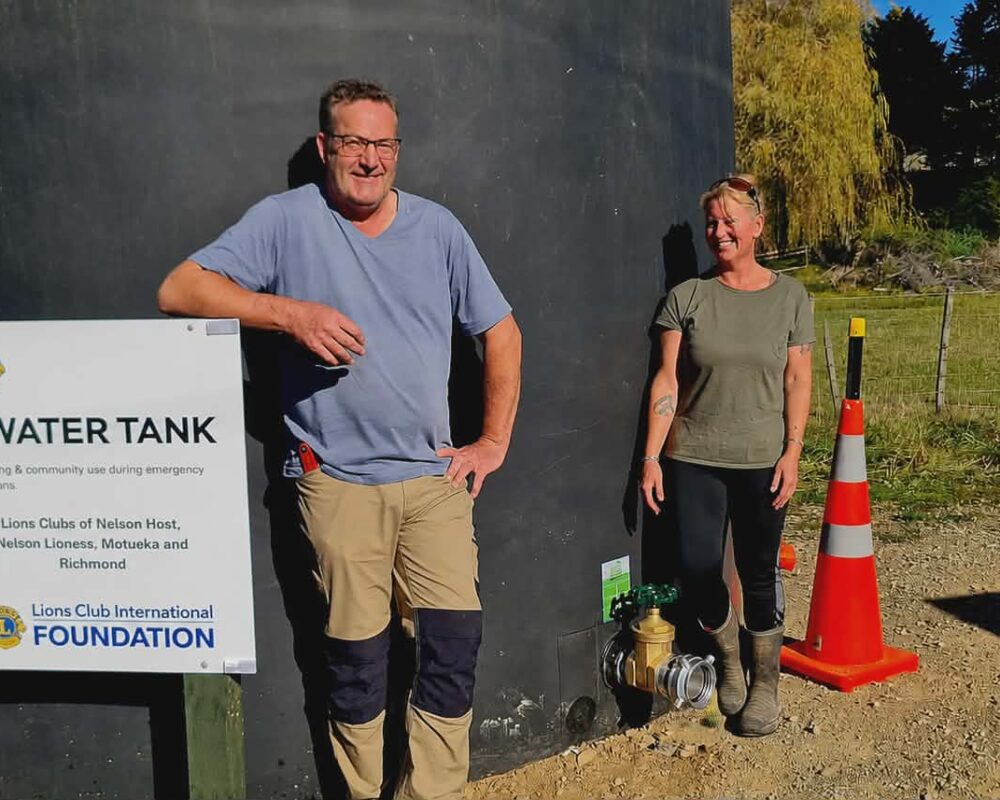
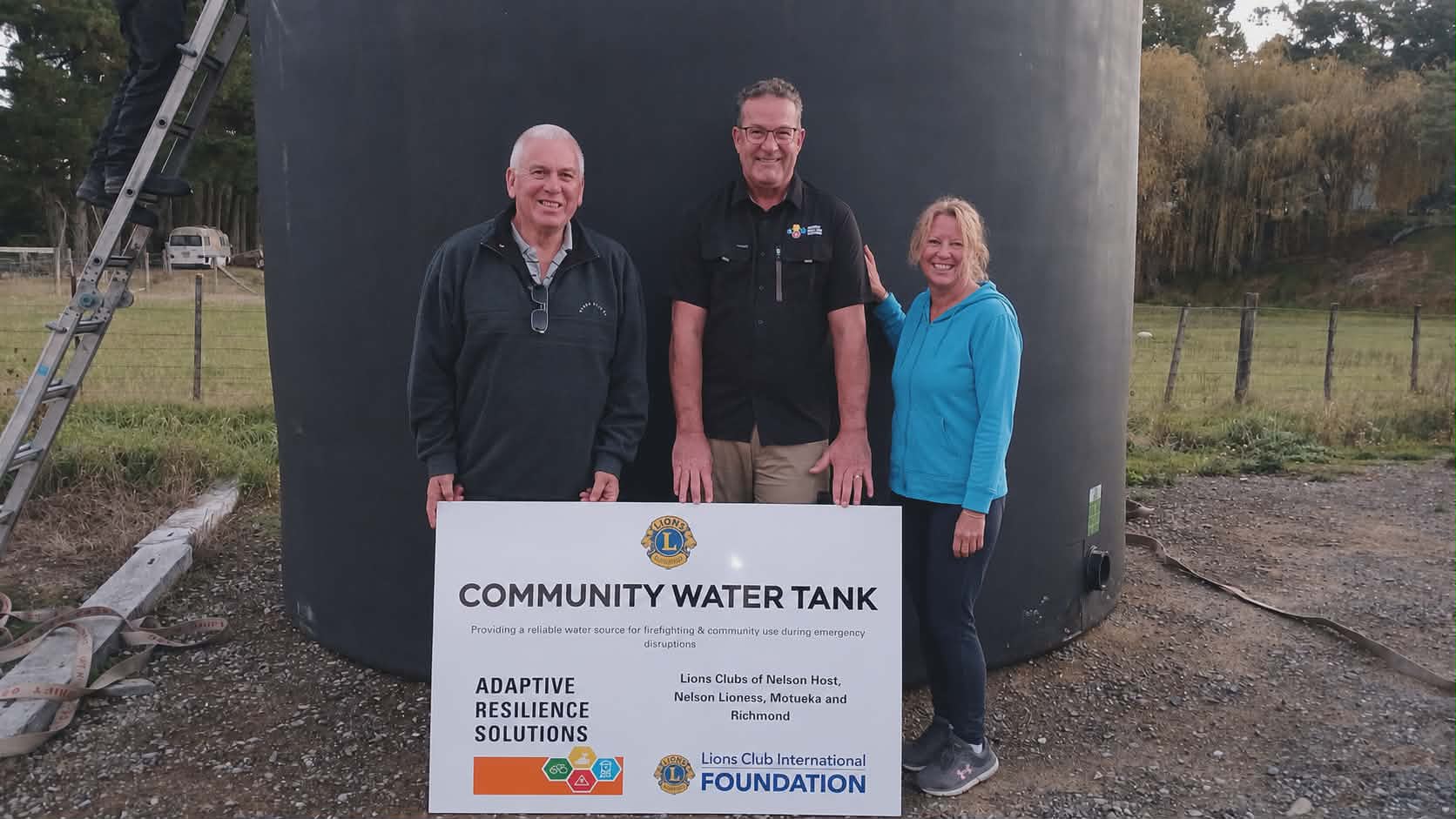
This project hasn’t happened in isolation, and it wouldn’t be where it is without the support of some remarkable people and organizations. We’re proud to be partnered with Lions New Zealand, a fellow charitable organization whose commitment to community resilience aligns closely with what this project is trying to achieve.
The Lions partnership brings more than just goodwill. It brings networks, local knowledge, and a shared understanding that communities look after themselves best when they’re organised, informed, and connected. Community resilience isn’t built by a single project or a single organisation — it’s built by people and groups working together toward a common goal, and that’s exactly what this partnership represents.
More Than Just a Tank — Planting for the Future
One thing we’ve been keen to avoid is simply dropping a large plastic tank in a public space and walking away. These tanks will be part of their communities for a long time, and we want them to feel that way.
As part of each installation, we plan to establish plantings around the tanks — a thoughtful mix of tall and low-growing species chosen to soften the visual impact and help the tanks sit more naturally in their surroundings. Nobody wants to look at a bare tank on a road berm for the next twenty years, and we don’t blame them.
But the planting serves a purpose beyond aesthetics. We also want to use it as an opportunity for community education around fire-resistant landscaping — sharing knowledge about which plant species are less susceptible to igniting, and why the choices you make around your home and property matter when it comes to fire risk. Plants with high moisture content, low resin levels, and open growth habits behave very differently in a fire than the dense, dry, or highly flammable species that are unfortunately common in many rural gardens. Getting the right plants in the ground close to structures is one of the simplest and most overlooked ways people can reduce their own risk — and we’d like these tank sites to be a small, visible example of what that can look like in practice.
Mapping What We Don’t Know
One of the less visible but genuinely important parts of this project is the Non-Reticulated Water Supply Mapping Project — an effort to systematically document water sources across the Top of the South that sit outside the public network.
Using Google Earth-compatible mapping, the project categories sources into four types: tanks, ponds, rivers, and pools. Each is assessed not just for its existence but for its practical usefulness — whether it can be safely accessed by a fire truck, whether the terrain allows a crew to work safely, whether proximity to structures makes it viable in a fire scenario.
This kind of baseline information is rarer than you’d think. Most communities don’t have a clear picture of what water resources exist beyond their taps. Building that picture — and keeping it current — is genuinely valuable, both for emergency services and for communities themselves.
A Community Project, Built on Local Knowledge
What makes this initiative different from a top-down infrastructure project is that local knowledge is built into the approach from the start. The people who live in these rural areas know things that no database can tell you: where the access tracks are, how they hold up in winter, what the water situation looks like in a dry summer. That knowledge is invaluable, and it’s central to how sites are identified and assessed.
The pilot approach is deliberate too. Rather than trying to scale immediately, the project aims to learn from real-world experience — get tanks in the ground, see how they perform, understand the challenges, and build from there. Belgrove is the beginning, not the ceiling.
Getting Involved
If you live in a rural area of the Top of the South and you’ve thought about water access — for fire, for drought, for an emergency — this project is for you. Whether you have knowledge of a potential tank site, land that might be suitable, or simply want to stay connected with the project as it develops, your involvement makes a difference.
And if you’re new to the area and this is the first you’re hearing about it — welcome, and thank you for reading this far. We’d love to hear from you.
This is a community project. And like all the best community projects, it works best when the community is part of it.